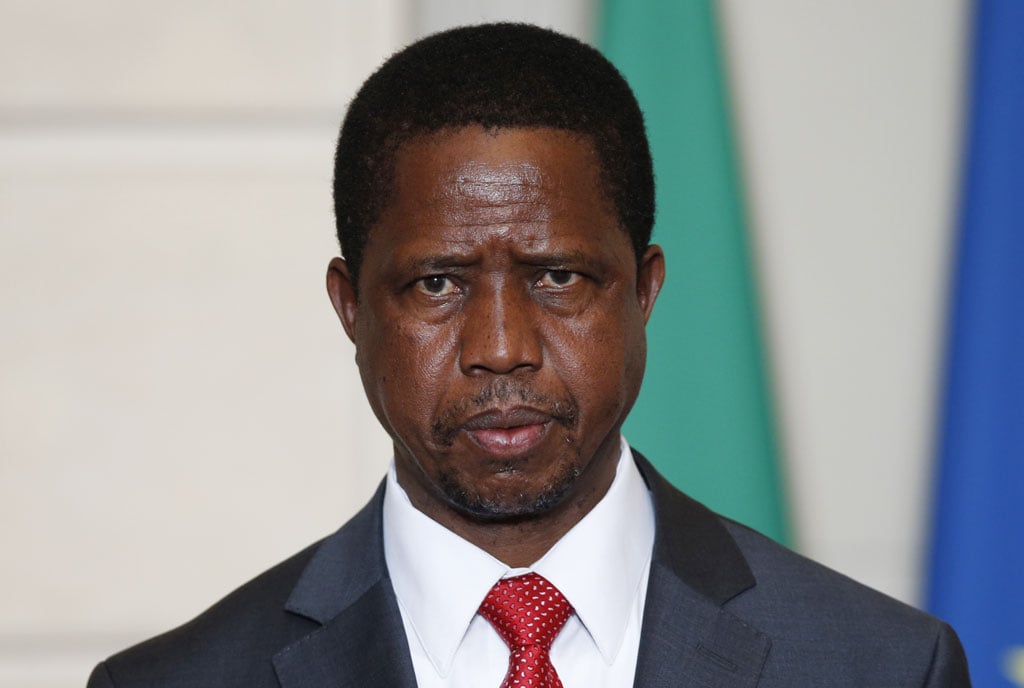
More than eight months after the death of former Zambian president Edgar Lungu, his body remains in a Pretoria morgue as a bitter dispute unfolds between his family and the Zambian government — a standoff that has evolved into a cross-border legal and political confrontation.
What began as a period of national mourning has hardened into a deeply personal and political conflict. Since June 2025, when Edgar Lungu died, disagreements over the cause of his death and the nature of his burial have prevented closure — not only for his family, but for a country still divided over his legacy.
Family Pushes Back on Poisoning Narrative
Relatives have repeatedly dismissed allegations that the former president was poisoned, calling the claims speculative and damaging. They argue that such assertions politicize his passing and inflame tensions at a moment that should be defined by dignity and respect.
The rejection of the poisoning narrative has become central to the standoff. Family representatives insist that decisions surrounding the funeral should rest primarily with them, rather than being directed by state authorities.
State Interests and Political Legacy
For the Zambian government, the matter carries constitutional and symbolic weight. As a former head of state, Lungu occupies a significant place in the nation’s political history. Officials maintain that burial arrangements for former presidents are not merely private affairs but events of national importance.
The disagreement has therefore evolved beyond funeral logistics. It now reflects broader tensions about authority, protocol, and how Zambia chooses to remember one of its most consequential political figures.
A Cross-Border Legal Deadlock
Complicating matters further is the fact that Lungu’s body remains in South Africa, where he died. The cross-border element has introduced additional legal layers, as any repatriation or final arrangements must align with both South African and Zambian regulations.
Legal proceedings and negotiations have stretched on for months, with no definitive resolution in sight. The prolonged impasse has drawn regional attention, underscoring how personal grief can intersect with state protocol and international law.
Why This Dispute Matters
At its core, the conflict raises fundamental questions about the balance between family rights and state responsibility. Who ultimately controls the legacy of a former president — the relatives who mourn him privately, or the nation he once led?
Until a resolution is reached, the continued presence of Lungu’s body in Pretoria stands as a stark symbol of unfinished business. For many Zambians, closure will only come when the legal wrangling ends and a final resting place is agreed upon — one that reconciles personal wishes with national memory.