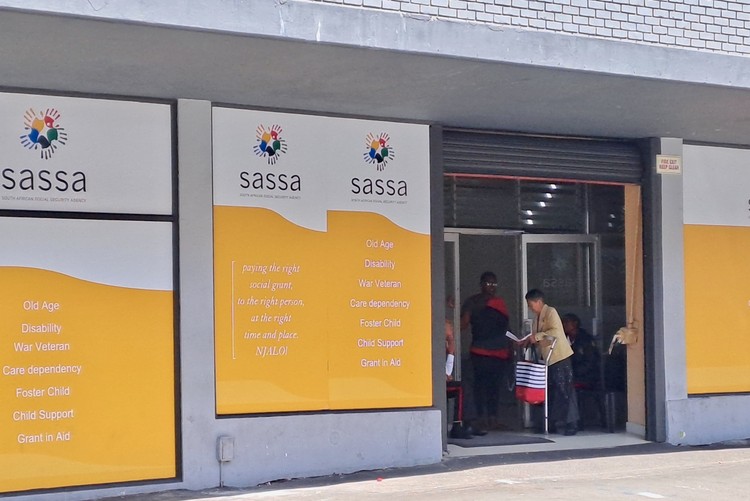
A renewed wave of online anger has erupted after confirmation that asylum seekers and special permit holders remain eligible for South Africa’s R370 Social Relief of Distress grant, a policy rooted in court rulings dating back to the COVID-19 era.
The South African Social Security Agency (SASSA) has once again confirmed that documented asylum seekers and holders of special permits remain eligible for the R370 Social Relief of Distress (SRD) grant, a clarification that has reignited fierce debate online and exposed deeper anxieties about unemployment, migration and the limits of the state’s social safety net.
The SRD grant, originally introduced in 2020 as a temporary emergency measure during the COVID-19 lockdowns, has since evolved into one of the country’s most significant poverty-alleviation tools. Treasury funding currently extends the programme to at least March 2027, with monthly payments of R370 aimed at unemployed adults with little or no income.
While the grant’s existence is widely accepted, who qualifies for it remains politically sensitive. In mid-January, a viral post on X claimed that SASSA had “just confirmed” that asylum seekers and special permit holders still qualify for the grant, placing them on the same footing as South African citizens and refugees. The post quickly attracted thousands of interactions, many expressing anger that taxpayer-funded support is extended beyond citizens.
In reality, the policy is neither new nor recently expanded. Eligibility for documented asylum seekers and special permit holders is the result of High Court rulings handed down in 2020, following legal challenges by civil society organisations including the Scalabrini Centre of Cape Town. The courts found that excluding these groups from emergency social relief was unconstitutional, particularly during a national disaster.
Under the current framework, applicants for the SRD grant must be between 18 and 60 years old, unemployed, and earning less than R624 per month. They may not receive other social grants, Unemployment Insurance Fund (UIF) benefits or similar state support. Crucially, eligibility is limited to South African citizens, permanent residents, refugees, asylum seekers with valid Section 22 permits, and holders of recognised special permits such as the Zimbabwean or Lesotho Exemption Permits.
SASSA maintains separate online application channels for South African ID holders and for asylum seekers or special permit holders, with verification conducted in cooperation with the Department of Home Affairs. Payments are subject to monthly checks intended to limit fraud, duplicate claims and ineligible recipients.
Despite these safeguards, public reaction has been sharp. South Africa’s official unemployment rate remains above 30 percent, and many citizens report rejected or delayed SRD applications. Against that backdrop, social media commentary has framed the policy as evidence of misplaced priorities, with some users questioning why scarce resources are shared in a country struggling to provide jobs and services for its own population.
Others have pushed back against what they describe as misinformation. Several fact-check style responses circulating online stress that not all foreigners qualify for the SRD grant, only those with recognised legal status under South African law. Refugees and asylum seekers, they argue, are protected under both the Constitution and international conventions to which South Africa is a signatory.
Legal experts note that the government has limited room to manoeuvre. “Once a court has ruled that exclusion is unconstitutional, the state cannot simply reverse that position without changing the law or successfully appealing the judgment,” said a Johannesburg-based constitutional law analyst, who requested anonymity due to the politicised nature of the issue.
The debate has also revived tensions around migration more broadly, echoing themes commonly raised by activist groups that oppose the presence of foreign nationals in South Africa. On Facebook and community forums, some posts have called for the grant to be restricted to citizens only, while others have sarcastically suggested applying as asylum seekers, reflecting a mix of frustration and cynicism.
For its part, SASSA has urged the public to rely on official communication and warned against scams or false claims circulating online. The agency has repeatedly emphasised that no new expansion of eligibility has taken place and that the current rules have been in force for several years.
As South Africa grapples with slow economic growth, rising living costs and persistent joblessness, the SRD grant has become a symbol of both relief and resentment. Whether the programme evolves into a permanent income support mechanism—or becomes further politicised ahead of future elections—remains an open question, one that cuts to the heart of how the country balances social protection, legality and public trust.