News Afrika
News Afrika
HomePoliticsEconomyMediaBusinessTechnologyHealth

Privacy PolicyTerms of ServiceAbout UsContact UsEditorial PolicyCorrections PolicyOwnership & FundingOur TeamCookie PolicySitemap

© 2026 News Afrika • Independent African Journalism • All Rights Reserved

    HomeEconomySouth Africa’s Inflation Falls to 3.5% — Confidence Slips After Strong Year
    Economy

    South Africa’s Inflation Falls to 3.5% — Confidence Slips After Strong Year

    Cooling price pressures raise expectations of future rate cuts, but softer business sentiment signals a delicate transition for Africa’s most industrialised economy.

    By:Nathaniel A. Bapela
    February 19, 2026
    2 min read
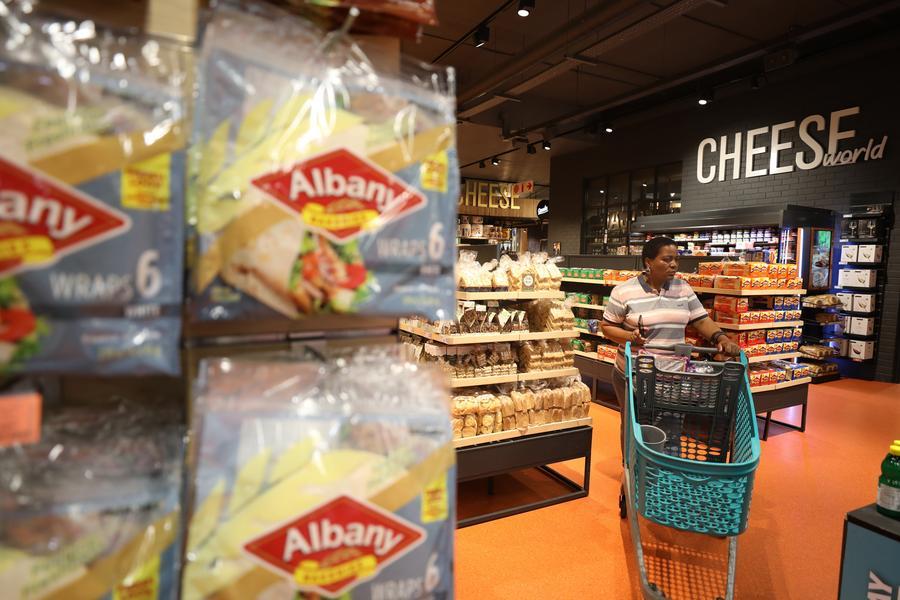
    South African shopper pushing a trolley through a supermarket aisle.
    A shopper navigates a supermarket aisle as inflation eased to 3.5% in January 2026. | Photo: File photo via Xinhua News
    • •Inflation slowed to 3.5% in January 2026.
    • •Markets now anticipate possible interest rate cuts later this year.
    • •Business confidence dipped slightly after a strong economic rebound.

    South Africa’s headline consumer inflation slowed to 3.5% in January 2026, comfortably within the South African Reserve Bank’s 3–6% target range and marking the softest annual reading in years. While households gain modest relief from easing price pressures, business confidence has edged lower following the country’s strongest economic year in nearly a decade.

    The latest inflation print signals a significant shift in South Africa’s macroeconomic cycle. After two years of elevated price pressures and aggressive monetary tightening, consumer inflation is now firmly contained within the target band set by the South African Reserve Bank (SARB). The 3.5% reading came in below many analyst forecasts, reinforcing expectations that the disinflation trend is gaining traction.

    The moderation was driven largely by easing food inflation, more stable fuel prices, and softer core goods inflation. Base effects also played a role, as current prices are being compared to higher levels recorded a year earlier. However, lower inflation does not mean prices are falling — only that they are rising more slowly.

    For consumers, this distinction matters. Grocery bills in major urban centres have stabilised, but cumulative price increases over the past two years continue to strain disposable income. Debt servicing costs remain elevated after a prolonged rate-hiking cycle, limiting immediate financial relief despite the softer inflation environment.

    Attention now turns to monetary policy. With inflation trending closer to the midpoint of the 3–6% target range, markets are increasingly pricing in the possibility of rate cuts later in 2026.

    Yet policymakers are expected to remain cautious. Global oil price movements, exchange rate fluctuations, wage settlements, and the stickiness of core inflation will all influence the timing of any policy shift.

    Interestingly, the improved inflation outlook coincides with a slight dip in business confidence. After benefiting from improved electricity supply stability and stronger sectoral performance last year, firms are reassessing forward prospects.

    This divergence highlights the transitional nature of the current economic moment. Inflation is easing, but growth momentum is beginning to normalise after a strong rebound year.

    Looking ahead, the sustainability of South Africa’s economic momentum will depend on whether inflation remains anchored while confidence and investment regain traction.

    South Africa enters 2026 at a macroeconomic crossroads: inflation under control, monetary policy cautiously poised, and business confidence adjusting.

    Tags

    South Africa
    Inflation
    SARB
    Interest Rates
    Business Confidence
    Monetary Policy
    Economy 2026

    Related Stories

    South African Electricity Minister Kgosientsho Ramokgopa speaking during a public address.
    ENERGY
    •2 MIN READ

    Ramokgopa Acknowledges Electricity Costs Are 'Expensive'

    Electricity and Energy Minister Kgosientsho Ramokgopa has acknowledged that electricity in South Africa has become increasingly expensive, responding to growing public frustration over rising tariffs and continued concerns about power supply stability.

    March 14, 2026
    Oil refinery and fuel infrastructure representing global fuel markets.
    ENERGY
    •3 MIN READ

    Fuel Price Outlook Turns Catastrophic as Brent Surges Past $100 and Rand Weakens

    South Africa could face a sharp increase in fuel prices as global oil markets surge amid escalating tensions in the Middle East. With Brent crude rising above $100 per barrel and the rand weakening against the US dollar, early estimates suggest petrol prices could climb by more than R5 per litre and diesel by over R8 if current trends continue.

    March 14, 2026
    Market paper graph with calculator and specs on the desk
    INVESTMENT
    •4 MIN READ

    Africa’s $3.4 Trillion Opportunity: Why Global Investors Are Turning to the Continent

    March 10, 2026
    Aerial view of open-pit copper mine with trucks and workers
    NATURAL RESOURCES
    •4 MIN READ

    The New Scramble for African Minerals: Who Really Controls the Resources?

    March 10, 2026