News Afrika
News Afrika
HomePoliticsEconomyMediaBusinessTechnologyHealth

Privacy PolicyTerms of ServiceAbout UsContact UsEditorial PolicyCorrections PolicyOwnership & FundingOur TeamCookie PolicySitemap

© 2026 News Afrika • Independent African Journalism • All Rights Reserved

    HomeCrimeCape Flats Gang Violence Surge Leaves 36 Dead in Early March
    Crime

    Cape Flats Gang Violence Surge Leaves 36 Dead in Early March

    Wave of murders and attempted killings exposes deep-rooted gang networks as SANDF deployments intensify in hotspot communities

    By:Nathaniel A. Bapela
    March 15, 2026
    3 min read
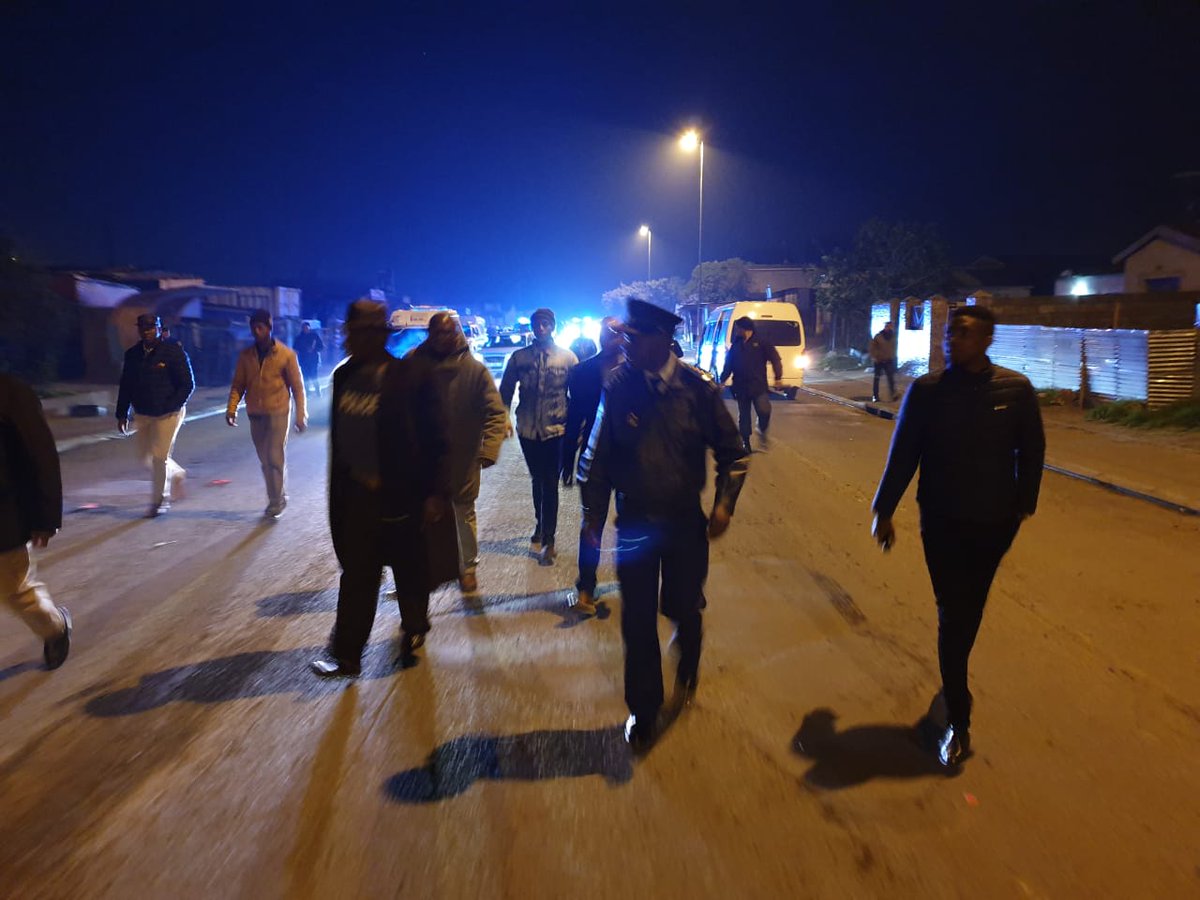
    Police vehicles patrol a Cape Flats community following gang-related shootings
    Law enforcement patrols parts of the Cape Flats following a surge in gang-related violence. | Photo: SAPoliceService
    • •At least 36 murders and 29 attempted killings recorded during an early March spike in gang violence.
    • •Security forces including SANDF troops continue operations in key Cape Flats hotspots.
    • •Analysts warn that deeper socio-economic issues continue to fuel gang recruitment.

    A surge in gang-related violence across the Cape Flats has left at least 36 people dead and 29 others injured in attempted killings during an early March window, highlighting persistent security challenges in some of Cape Town’s most vulnerable communities.

    A sharp escalation in gang-related violence across the Cape Flats has triggered renewed concern among residents, law enforcement agencies, and policy analysts. During a short window in early March, authorities recorded 36 murders and 29 attempted killings linked to gang conflicts across several neighborhoods.

    The incidents, which unfolded across known gang hotspots including Manenberg, Hanover Park, and Mitchells Plain, have once again highlighted how deeply entrenched organized street gangs remain within parts of Cape Town’s urban landscape.

    Military Presence Returns to the Streets

    In response to the spike in violence, the South African National Defence Force (SANDF) has maintained deployments in several Cape Flats communities, working alongside police units in targeted operations aimed at stabilizing high-risk areas.

    Military patrols have focused on disrupting gang activity, supporting police raids, and increasing visibility in areas where shootings and retaliatory attacks have become common. Residents in affected neighborhoods say the presence of soldiers can temporarily reduce gun violence, but many believe the impact fades once deployments end.

    Cycle of Retaliation

    Gang violence in the Cape Flats often follows a pattern of retaliatory attacks between rival groups competing for control of drug distribution networks and territory. Even minor disputes can escalate rapidly into extended cycles of shootings that leave multiple victims over a short period.

    Investigators say that many of the recent incidents appear to be linked to ongoing territorial disputes and internal gang rivalries. In several cases, attempted killings were reported only hours after earlier shootings, suggesting coordinated retaliation between rival groups.

    Why the Cape Flats Remains Vulnerable

    Experts argue that the persistent violence cannot be separated from broader socio-economic conditions in the region. High unemployment, limited economic opportunities, and decades of spatial inequality have created environments where gangs are able to recruit young people seeking income or protection.

    Community organizations operating in the Cape Flats say that long-term safety will require more than policing and military deployments. They argue that sustained investment in education, youth development, and job creation is necessary to reduce the influence of gangs in local communities.

    Communities Caught in the Middle

    For residents, the latest surge in violence reinforces a sense of vulnerability that has persisted for decades. Schools sometimes close early during violent periods, local businesses reduce operating hours, and families often avoid leaving their homes after dark.

    While law enforcement continues to pursue gang leaders and disrupt criminal networks, community leaders warn that without structural reforms and long-term policy solutions, periodic surges of violence in the Cape Flats may continue to define life in the region.

    Sources

    • South African Police Service
    • Western Cape Government Safety Reports

    Tags

    Cape Flats
    Gang Violence
    SANDF
    Cape Town Crime
    South Africa Crime
    Community Safety

    Related Stories

    SAPS officers in blue uniforms with a civilian suspect at rocky abandoned mine site under blue sky.
    PUBLIC SAFETY
    •6 MIN READ

    From 71 Murders a Day to Decline: Are South Africa’s Crime Stats Finally Turning?

    For years, South Africa’s crime statistics carried a grim rhythm: roughly 71 people killed every day. Now, new quarterly police data suggests a possible shift. Murders declined by 8.7% during the third quarter of the 2025/26 financial year — 602 fewer victims compared to the same period a year earlier. Violent crime overall dropped 6.7%. But behind the headline figures lies a more complicated reality: attempted murders remain high, sexual offences show stubborn persistence, and the country’s most dangerous neighbourhoods continue to produce the majority of killings. The question facing policymakers and voters alike is whether South Africa is witnessing the start of a real decline in violence — or simply a temporary dip.

    March 7, 2026
    Inquest Opened After Man Found Dead at Brakpan Filling Station
    POLICE INVESTIGATIONS
    •2 MIN READ

    Inquest Opened After Man Found Dead at Brakpan Filling Station

    South African police have confirmed that an inquest docket has been opened after a 41-year-old man was found dead at a filling station in Brakpan on Saturday, as authorities move to formally establish the circumstances surrounding the death.

    February 8, 2026
    Why cash-in-transit robberies remain a major threat in South Africa
    CRIME
    •3 MIN READ

    Why cash-in-transit robberies remain a major threat in South Africa

    Cash-in-transit robberies have become one of South Africa’s most persistent and dangerous forms of organised crime, posing risks to security guards, bystanders and communities while exposing deeper economic and policing challenges.

    February 3, 2026
    Stack of passports seized by police
    COURT AND POLICING
    •3 MIN READ

    Zimbabwean Man Held After Police Find 580 Passports in Mpumalanga

    South African police have arrested a 43-year-old Zimbabwean national after discovering more than 580 passports and over R147,000 in cash hidden inside his vehicle during a stop near Belfast in Mpumalanga.

    December 16, 2025