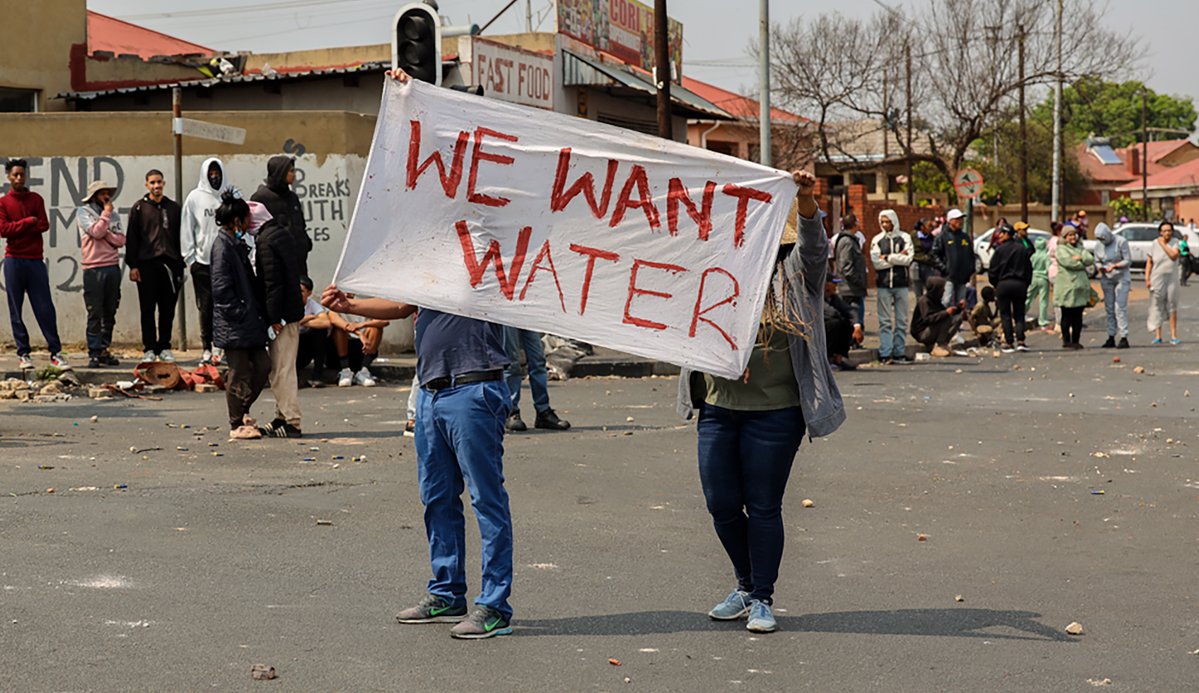
As taps run dry in parts of Johannesburg and Pretoria, residents are reliving a crisis that many thought had already reached its breaking point in Hammanskraal. What was once described as a localised failure now appears to be a widening pattern across Gauteng.
In suburbs across Johannesburg, residents have grown accustomed to keeping buckets filled and boreholes on standby. Now, parts of Pretoria are reporting similar frustrations: erratic supply, sudden pressure drops, and prolonged outages with limited communication. For many households and businesses, water security in Gauteng has shifted from inconvenience to anxiety.
From Local Breakdown to Regional Pattern
While authorities often attribute interruptions to maintenance, pump failures, or power-related disruptions, the frequency and geographic spread suggest something deeper. The recent complaints in Pretoria mirror patterns long experienced in Johannesburg — aging pipes, overstretched treatment plants, and infrastructure operating beyond its intended lifespan.
The situation inevitably draws comparisons to Hammanskraal, north of Pretoria, where residents endured years of unsafe water linked to the Rooiwal wastewater treatment works. What began as a localised contamination crisis became a symbol of systemic failure — delayed upgrades, insufficient oversight, and slow accountability.
“When one municipality struggles, it’s a warning. When multiple metros struggle at the same time, it’s a structural problem,” said a water governance analyst based in Gauteng.
Infrastructure Under Strain
Gauteng is South Africa’s economic engine, home to dense urban populations and heavy industrial demand. Water systems built decades ago are now supporting far more people than originally projected. Deferred maintenance, budget constraints, and skills shortages have compounded the strain.
- Aging bulk pipelines vulnerable to bursts
- Pump stations affected by electricity instability
- Treatment plants running near or above capacity
- Delayed capital upgrades and procurement bottlenecks
Experts warn that without coordinated provincial intervention, intermittent outages could become the norm rather than the exception. Businesses reliant on consistent supply — from restaurants to manufacturing plants — are already factoring water insecurity into operating costs.
The Human Cost Beyond Headlines
For households, the impact extends beyond dry taps. Parents queue at communal water tankers before dawn. Clinics struggle with sanitation during outages. Informal settlements, often last in the supply chain, face the longest disruptions. In Hammanskraal, residents recall years of buying bottled water while waiting for infrastructure promises to materialise.
The psychological toll is harder to quantify. Trust erodes each time an outage extends without clear timelines. Community forums fill with speculation, frustration, and survival advice — from installing JoJo tanks to drilling private boreholes. Water, once assumed constant, is now treated as a contingency risk.
Why This Matters Now
South Africa is not in a drought cycle severe enough to explain the scale of urban interruptions. The issue is less about natural scarcity and more about management resilience. If Gauteng — the country’s wealthiest province — struggles to maintain stable supply, the implications for smaller municipalities are stark.
The convergence of failures in Johannesburg and Pretoria suggests a pattern: infrastructure expansion has not kept pace with population growth, and maintenance budgets have lagged behind political cycles. Hammanskraal’s experience showed what happens when warnings go unheeded. The current spread of outages indicates that lessons may not have been fully internalised.
What Happens Next?
Provincial authorities have pledged upgrades and emergency interventions, but sustainable reform requires long-term capital planning, transparent procurement, and measurable timelines. Independent audits of water boards and municipal performance could restore some public confidence.
For residents in Johannesburg, Pretoria, and Hammanskraal, the immediate priority is simple: reliable, safe water. But the broader question is whether Gauteng’s leadership will treat these disruptions as isolated technical glitches — or as evidence of a system that requires structural repair.
Water crises rarely announce themselves dramatically. They unfold gradually — through pressure drops, tanker queues, and community complaints. Gauteng may now be at a crossroads: either invest decisively in resilience, or risk normalising instability in the province that anchors South Africa’s economy.